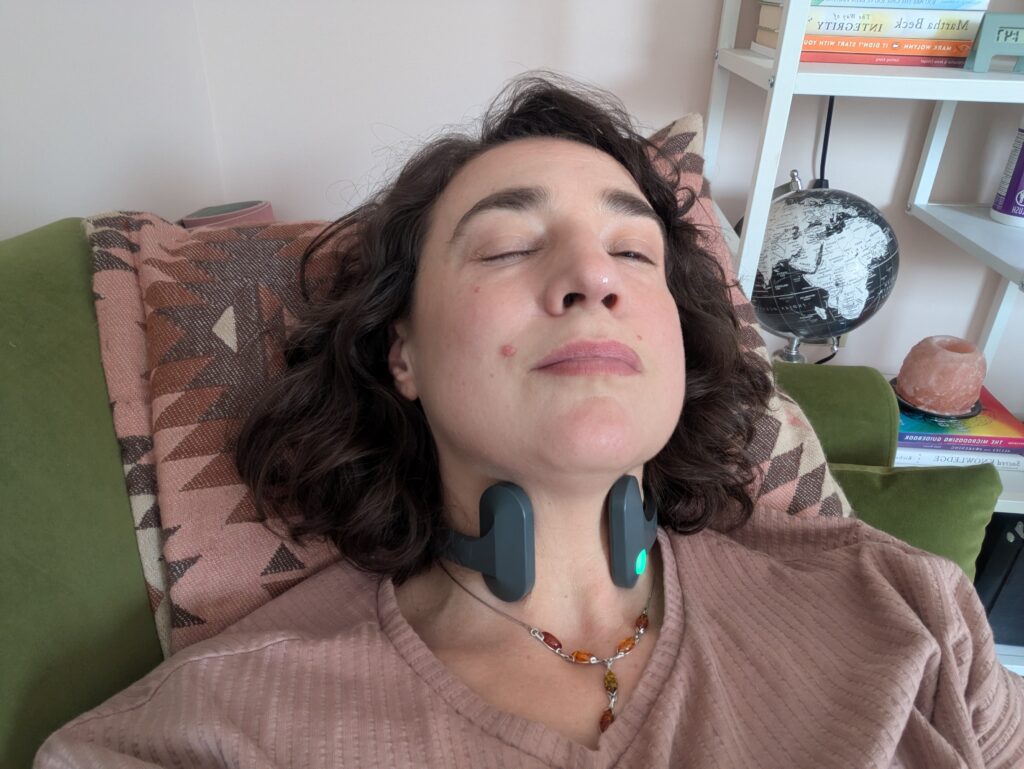
Coping strategies – which are an important part of self-care – work. They do. Even for someone whose nervous system is chronically elevated because of prior trauma, stressful life conditions, or through the incredibly costly weight of living in a world that’s not calibrated for them (hello, BIPOC, LGBTQ+, and neurodivergent folks, I see you!), coping strategies can make the difference between being constantly under stress – and let me tell you, that’s not good! – or regaining at least a modicum of calm.
That said…
Coping strategies can feel like another item on the proverbial to-do list. Something else you need to/have to/ought to/must DO. And doing is tiring. It requires resources (also known as spoons) which, unfortunately sometimes run out. Doing can feel like a toilsome chore.
But…
Drum roll! That was before passive coping strategies! Here is why I like them:
1. Because they’re passive it lowers the bar to entry and the perceived effort one is going to have to put in. This diminishes the resistance to using the device/technique. They don’t seem quite as effortful as coping skills that require action or – duh! – effort.
2. Because they’re passive, they also don’t require folks to be both in the facilitator’s and in the recipient’s roles. Compared to any old fashioned coping method that requires splitting one’s attention between monitoring one’s experience and remembering what to do next, passive coping strategies are easier to use because there is no need to guide the experience. It’s easier to fully relax into receiving the benefits of the experience. That makes them more straightforward and, I think, more effective.
3. The effectiveness of the passive coping strategy is not moderated by how well one is executing an exercise. The way a person meditates or breathes has an impact on the effectiveness of their meditation or breathing practice, which then in turn impacts the level of relaxation they can achieve. Whereas that is much less true when there is no exercise or practice to execute in any given way. So it’s immediately rewarding, incredibly beginner friendly, and gives you an immediate taste of nervous system regulation (aka relaxation response), not one that takes months – at best – of practice to refine and achieve.
That said, I have nothing against the more traditionally known, more active coping strategies. You know them: meditation and breathwork come to mind. In fact, one could say that passive strategies are missing the crucial component of training the mind/body to heal itself. And while that is 100% true, this won’t help someone who is too crushed by their life to make the effort to meditate, do breathwork, exercise, practice tapping, and so on and so forth.
So WHAT ARE THESE PASSIVE COPING STRATEGIES? You might ask in anger, frustrated that I have saved this question to the end of the article. Here is a non-exhaustive list:
- Vagus nerve stimulators. You turn it on, wear the device in one way or another, go about your day and feel calmer a few minutes later without seemingly having had to do anything such as sitting in a meditation posture, watching your breath, etc. I have recommended Pulsetto to many people, but there are many others on the market.
- Acupressure mats and pillows. Just recline against or lie down on top of one of those and let the spikes slowly dissolve muscular tension. Chronic stress leads to tension. Reliving the tension correlates with lowering stress levels. You can watch TV on it, read a book, sleep even. No yogi skills required,
- Recorded guided meditation, nature sounds, binaural beats: play them in the background, or sit down and relax. No need to create the perfect serene oasis of meditation if it gets in the way of even pressing play. A very much imperfect oasis is still more effective than not listening to these at all,
- But also back massagers,
- Heating pads,
- Foot – or whole body – soaks in Epsom salt,
- Weighted blankets,
- Essential oils wafting through the air,
- Etc.
All of these require less effort than the recommended self-care strategies that usually make it onto therapists’ suggestion lists, including mine. But I have come to appreciate the ease and effortlessness that using these bring. And who doesn’t want to work less in order to feel better?